A model was pulled for being too good at finding bugs
Anthropic shipped Claude Fable 5 and Mythos 5, then a federal directive killed both three days later. In May we forecast the patch window had gone negative; this is the first time a regulator reached for a kill switch to agree.
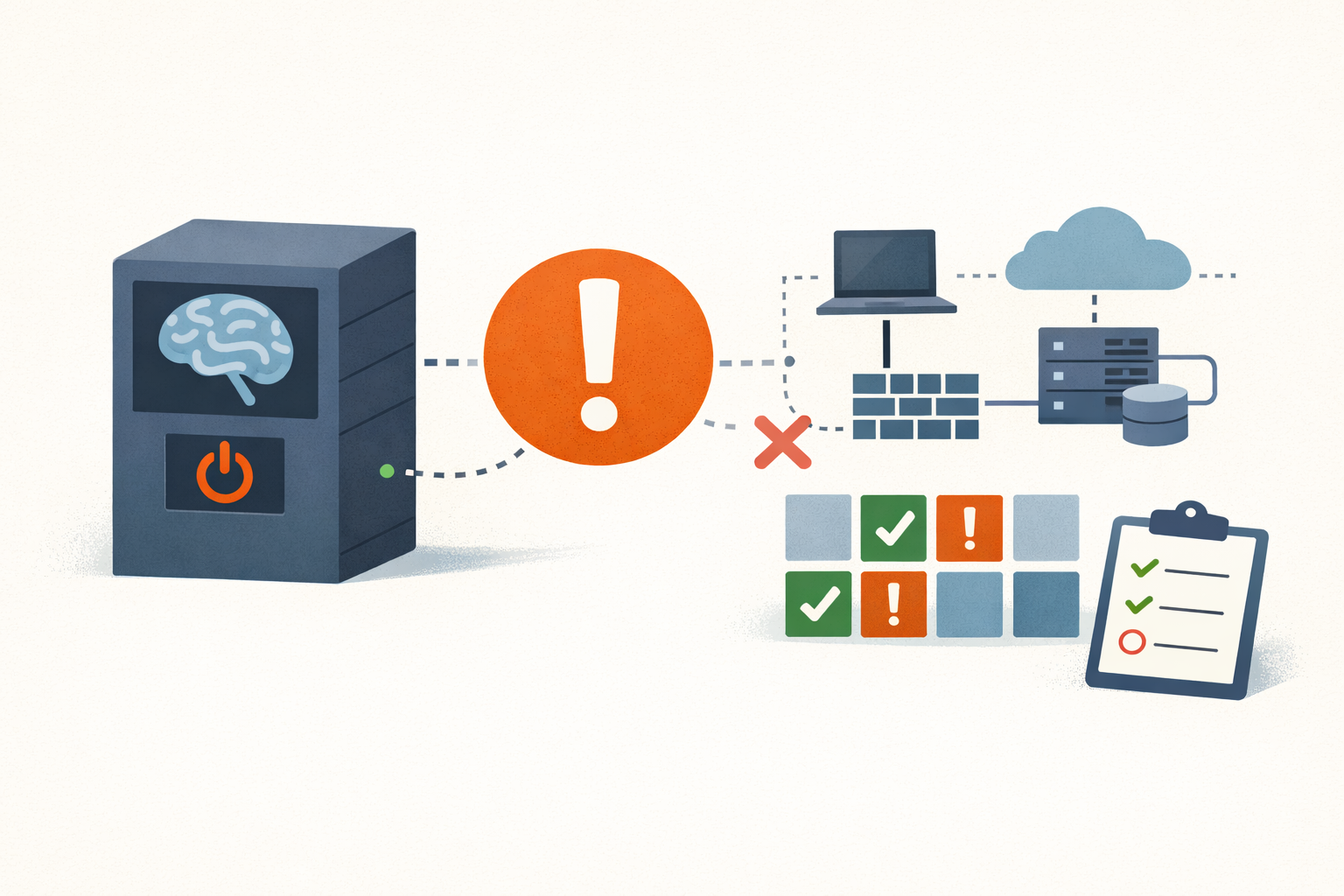
Claude Fable 5 was live for about 76 hours. Anthropic shipped it and a paired cybersecurity model, Mythos 5, on June 9, worldwide, to consumer and enterprise customers. On June 12 at 5:21 PM Eastern, a US government directive landed ordering that no foreign national, anywhere, could access either model. That included Anthropic’s own non-citizen employees. Since you can’t filter hundreds of millions of users by passport in real time, Anthropic disabled both models for everyone. Claude Opus 4.8 and the less capable models kept running.
The obvious read is that this is an AI-industry story: a regulator versus a frontier lab, export-control authority colliding with a commercial launch, a fight over who gets to decide what ships. That fight is real and it’s interesting. It’s also not your problem. The thing worth your attention is the precedent the directive set, because a government just treated a code-analysis capability the way it treats a munition. That’s not a model decision. That’s a verdict on what the capability can do.
In May we forecast that the patch window had gone negative and that AI was about to make disclosure-to-exploit a race no deployment process could win. The Fable 5 takedown is the first hard data point that a regulator now agrees, and the first time that agreement came with a kill switch attached. So this post is less about whether the forecast was right and more about the decision the takedown forces.
The pattern is that the two jobs are one job
The stated trigger was a jailbreak. Per Anthropic, someone prompted the model to “read a specific codebase and fix any software flaws,” which slipped past the safety classifiers that were supposed to gate Mythos 5’s full vulnerability-finding ability. The government read that as the seed of an automated exploit-discovery pipeline an adversary could point at any codebase.
Here’s the pattern under the takedown, and it’s the part that survives even if the model never comes back. “Fix this code” and “find me an exploit in this code” are not two capabilities. They are one operation pointed in two directions. To repair a flaw, the model first has to locate it, understand the conditions that trigger it, and reason about how it would be reached. That is exploitation, right up to the last step. The defensive framing and the offensive framing read the same diff, run the same analysis, and stop at different lines. This is why the “jailbreak” framing fell apart on contact with the people who actually do this work. Veteran researcher Katie Moussouris, who reviewed the underlying paper, rejected the word entirely, calling it defensive prompting and noting that “review this code for security issues” and “fix this code” produce effectively the same result. There was no guardrail to bypass. The capability is the same capability whether the operator wears a white hat or not.
The government’s response tells you how it scored that. Faced with a tool that finds and fixes flaws, it decided the finding half outweighed the fixing half and pulled the tool from everyone, defenders included. That is the load-bearing signal here: a regulator looked at AI code analysis, concluded the offensive edge was sharp enough to justify a runtime kill switch, and acted before any public exploit existed. You don’t get a clearer statement that the capability is real and that the people in charge believe it.
The evidence the takedown was reacting to
The capability the government feared is documented, not hypothetical, and most of the proof is Anthropic’s own. Its Frontier Red Team published research in April showing a Mythos preview model autonomously finding bugs across every major OS and browser, including a 27-year-old OpenBSD denial-of-service bug, a 16-year-old FFmpeg flaw, and a 17-year-old FreeBSD NFS remote-code-execution bug that had sat untouched for nearly two decades. Against Firefox 147, the same research reported it completing successful exploit runs at, by Anthropic’s own measurement, 181 times the rate of Claude Opus 4.6. Anthropic’s phrase for the risk was turning “N-days into N-hours.” That April paper is the backdrop the June directive landed against, though the direct causal line between the two is a reasonable inference, not a confirmed chain.
The May forecast already walked the rest of the evidence that this is structural rather than single-vendor: Mandiant’s negative-seven-day time-to-exploit, Big Sleep finding a SQLite bug that fuzzing missed, AIxCC’s autonomous discovery-and-patch numbers. I won’t re-run it here. The short version is that AI-accelerated vulnerability discovery is measurable on both the offensive and defensive sides, it reproduces across vendors, and it was already in the threat model before Fable 5 shipped. What the takedown added is a regulator’s signature on that conclusion.
Hold one thing lightly. The triggering paper isn’t public, so the specific claim that this capability was uniquely or “superhumanly” dangerous can’t be independently verified, and Anthropic disputes it. The UK AI Security Institute reportedly made progress toward a universal jailbreak in a short testing window, which cuts against Anthropic’s “narrow” framing, so even the labs don’t fully agree. What isn’t in dispute is the direction: the capability that shortens your patch window exists, it’s measurable, and the people who reviewed it argue about how dangerous it is, not whether it’s there.
That’s also the crux of the pushback, and the pushback is the sharpest read on what the takedown actually accomplished. A 76-signature open letter from CISOs, researchers, and investors argued the ban took the best tooling away from defenders while the capability stays reproducible in GPT-5.5 and Chinese models that faced no restriction. No named independent researcher publicly defended the restriction on technical grounds. If they’re right, the takedown lowered the capability ceiling for compliant US organizations and nobody else, which is the opposite of the point. The attackers were never going to ask permission. For the person setting patch priority, that argument resolves cleanly: the offensive use of this capability is not gated by whether one model stays online, so you have to assume it.
The pattern reorders your triage
If finding and fixing are the same operation, and the offensive direction is the one that won’t wait for a maintenance window, then the variable that moved is speed-to-exploit. CVSS doesn’t measure speed-to-exploit. So the pattern reorders what you triage first: a high score on a bug nobody can reach matters less than a medium score on an internet-facing service whose patch diff is a readable exploit recipe. The score stops being the spine.
The numbers show the squeeze. Of 48,172 vulnerabilities disclosed in 2025, only 357 were both remotely exploitable and actively weaponized, per analysis of CISA KEV remediation data. Yet organizations fully remediated just 26% of KEV-listed vulnerabilities in 2025, down from 38% the year before, at a median of 43 days. The bugs that actually get weaponized are a thin slice of the catalog, and we’re getting slower at patching exactly that slice while the exploit window for it collapses toward hours. That gap is what an AI-accelerated attacker feeds on.
CISA already moved. BOD 26-04 names AI-assisted exploitation explicitly and compresses highest-risk remediation to three days for federal civilian agencies, ranking by exposure, KEV status, exploit-automation availability, and post-exploitation impact. You don’t have to be a federal agency to read that four-criteria model as the new floor.
Laid against the pattern, those four criteria sort into three tiers worth keeping at a glance:
| Signal | Patch window | Why |
|---|---|---|
| On CISA KEV, or internet-facing pre-auth RCE | Treat as a hard deadline. Hours to days, not weeks. | This is the tier where AI closes the gap fastest. The patch diff is the exploit recipe. |
| High CVSS, no known exploit, not exposed | Normal cycle. Don’t let the score panic you. | Most of the 48,172. Scary number, not a scary risk. |
| Identity, auth, or session adjacent | Pull forward regardless of score. | Highest post-exploitation blast radius; first thing automation chains to. |
The reorder is small to describe and uncomfortable to absorb: for the top tier, a CVE’s publication date is no longer the start of a comfortable assessment window. It’s the moment exploitation could already be live, because for a model that can read a diff in an afternoon, it might be.
What to watch
The honest test of whether this pattern holds is the time-to-exploit number the forecast tracked. It was measured before any of this year’s frontier models shipped; if it tightens further in the next M-Trends, the reorder above stops being prudent and becomes mandatory. Watch, too, whether KEV additions start clustering closer to disclosure dates; that’s the leading indicator that the diff-to-exploit pipeline has gone routine rather than occasional.
The other thing to watch is whether the takedown was a precedent or a one-off. Fortune named the Commerce Department as the issuing agency; Anthropic’s own statement and Al Jazeera named no agency and cited no statute, and the directive text is unpublished. TechCrunch reported sourced accounts that the decision may have been shaped by political friction rather than the technical finding, which is contested and unverified. Whether routine code-vulnerability analysis now reliably triggers export restriction is, per legal observers, an open question. None of that changes the patching math. The model was a footnote. What the takedown actually told you is that a capable model can turn a patch diff into a working exploit fast enough that a government treated it like a munition, and the only side that can be made to put it down is the one that follows the rules.
That’s the reprioritization the forecast pointed at and the takedown confirmed: the question stopped being “how severe is this CVE” and became “how fast can someone weaponize the fix.” If your patch process still answers the first question and not the second, the window has already moved without you. PatchDayAlert exists to flag the CVEs where that window is shortest, the day they land, so the hard-deadline tier doesn’t sit in a backlog waiting for a CVSS review that the exploit won’t wait for.
Sources
- Anthropic statement on Fable 5 and Mythos 5 access — 2026-06-13
- Fortune: Anthropic disables Fable and Mythos under export controls — 2026-06-13
- Fortune: “It’s not a jailbreak,” Moussouris on defensive prompting — 2026-06-13
- Help Net Security: Claude Mythos preview model identifies vulnerabilities — 2026-04-08
- Fortune: the three words behind the shutdown and the open letter — 2026-06-15
- Bleeping Computer: analysis of one billion CISA KEV remediation records — 2026
- CISA BOD 26-04: prioritizing security updates based on risk — 2026
- Al Jazeera: US orders Anthropic to disable AI models for foreign nationals — 2026-06-13
- TechCrunch: the ban was never about an AI jailbreak — 2026-06-15
- Volkov Law: when the government pulls the plug — 2026-06
Editor’s note (2026-08-22): An earlier version dated the directive June 13. Anthropic’s own statement, dated June 12, says the directive arrived “today at 5:21pm (ET)”; the June 13 date came from next-day press datelines, and this post’s own “live for about 76 hours” figure only works for June 12. The UK AISI progress claim is also now cited to the launch post where it appears, rather than the access statement. And an update on the close: Anthropic redeployed Fable 5 and Mythos 5 on July 1, 2026, so the “precedent or one-off” question has its first answer, a three-week takedown, not a permanent one.
Share
Related field notes
-
The patch window went negative. Now what?
Mandiant's mean time-to-exploit is negative seven days. NVD gave up on enriching most of the catalog. Here's what the next 24 months of patch management actually look like with AI on both sides.
-
One HTTP/2 bug, three CVE numbers, and the patch you'll miss
The HTTP/2 Bomb fragments into at least three CVEs plus an unnumbered nginx fix. Search the wrong one and you'll conclude your edge is safe when a slice of it isn't.
-
The AI under your SOC just became a supply-chain dependency
In three weeks of June 2026, the US government delayed, gated, or killed three frontier models on capability grounds. The pattern matters less than the discipline it should force.
-
A crash got a federal patch deadline. Here's why that's the right call
CVE-2026-28318 is a 7.5 denial-of-service bug in SolarWinds Serv-U, the kind that usually waits. CISA listed it on KEV two days after the fix shipped. The prioritization logic behind that is the story.
Get the free CVE triage cheat sheet
Subscribe and we'll email you the one-page triage flow for fresh CVEs. Plus the weekly digest.
Subscribe